Why Empathy Matters
Why localized and community connections matter now more than ever amid ICE and federal raids

There are moments in history when empathy stops being a personal virtue and becomes a collective necessity. There are moments in history when empathy stops being a personal virtue and becomes a collective necessity.
We are living in one of those moments now.
Across the United States, intensified enforcement actions by U.S. Immigration and Customs Enforcement and other federal authorities have sent waves of fear through immigrant communities—many of whom have lived, worked, paid taxes, raised families, and contributed to their neighborhoods for years or decades. These raids don’t just remove individuals. They destabilize entire communities.
And they do so intentionally.
Fear is the point
Federal raids are not only about enforcement; they function as a tool of intimidation. When people are taken from homes, workplaces, or traffic stops, the message ripples outward: you are never safe.
The consequences are immediate and devastating:
Parents stop taking their children to school
Survivors stop reporting domestic violence
Workers stop showing up for jobs
Families stop accessing healthcare
Entire neighborhoods go quiet
Fear isolates people. Isolation makes people easier to control.
This is where empathy—and community—matters most.
Community is the antidote to isolation
Empathy interrupts what fear tries to accomplish.
When neighbors check in on one another.
When community members share verified information instead of rumors.
When churches, mosques, and mutual aid groups open their doors quietly and without conditions.
When someone says, “You’re not alone. We’re watching out for you.”
These acts are not symbolic. They are stabilizing. They restore a sense of safety when institutions deliberately strip it away.
Localized networks move faster and more humanely than any federal system ever could—because they are built on trust, not surveillance.
Local knowledge protects people
National policy is blunt. Community response is precise.
Local organizers and neighbors know:
Which families are most vulnerable right now
which employers cooperate with enforcement
which landlords exploit fear to threaten eviction
Which clinics, schools, and spaces are safe
That knowledge doesn’t come from press briefings. It comes from lived experience and relationships built over time.
When communities organize rapid-response teams, court accompaniment, childcare coverage, emergency housing, and mutual aid funds, they are doing more than reacting—they are preserving dignity.
Empathy is not passive—it is resistance
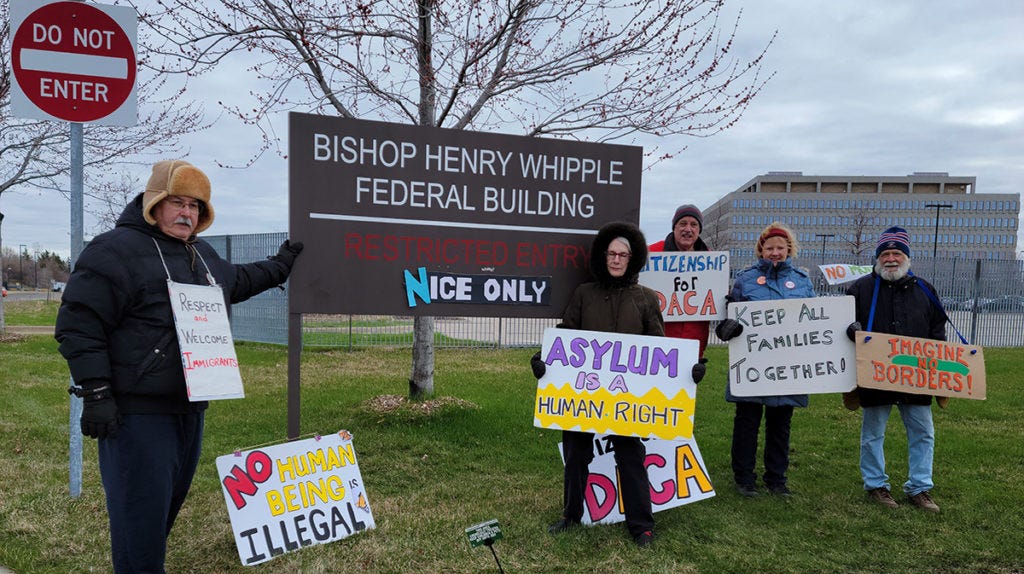
Empathy is often framed as soft or sentimental. In reality, it is deeply political.
Choosing to see undocumented neighbors as human beings—rather than threats or talking points—directly challenges the logic that justifies raids in the first place. Empathy reframes the conversation from “Who deserves to be here?” to “How do we protect one another?”
That shift matters.
It is how bystanders become witnesses.
How witnesses become allies.
How allies become organizers.
History shows us again and again: the most dangerous systems rely on dehumanization to function.
Empathy disrupts that process.
Community care fills the gaps the state creates
Federal enforcement arrives with force—but leaves no plan for the aftermath.
Children are left traumatized.
Households lose income overnight.
Rent goes unpaid.
Legal systems become impossible to navigate alone.
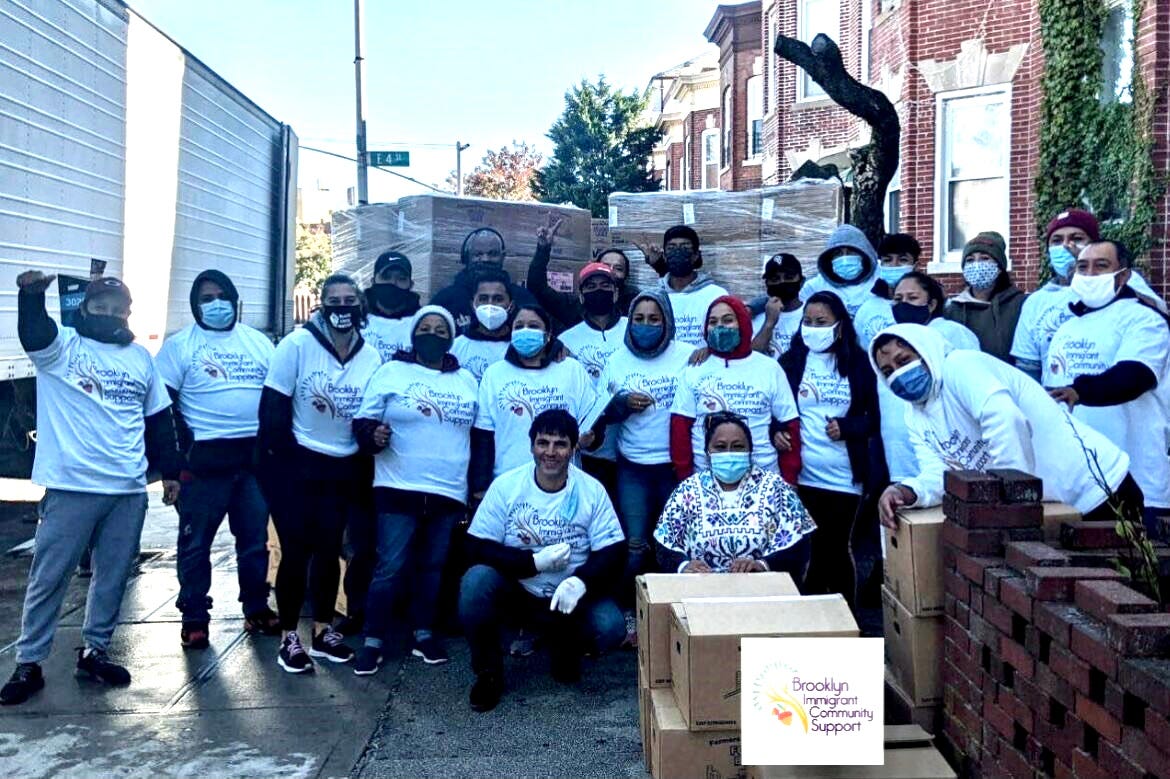
Local organizations—often underfunded and overstretched—step in to do the work the government refuses to do. Mutual aid groups, immigrant defense coalitions, culturally specific nonprofits, and informal networks become the real safety net.
This is not accidental. It is structural abandonment.
Empathy, expressed through action, becomes the bridge between survival and collapse.
What this moment asks of us
You don’t need to be a lawyer.
You don’t need to be an organizer.
You don’t need to put yourself at risk to matter.
But this moment does ask something of all of us:
Pay attention to what’s happening locally, not just nationally
Build relationships before a crisis hits, not after
Support grassroots groups doing quiet, lifesaving work
Push back when fear and dehumanization are treated as normal
Most of all, remember this:
Community is not an abstract idea.
It is a daily practice.
And empathy is the muscle that keeps it alive.
Because when federal power shows up at the door, it is not policy that protects people.
It is people protecting people.
Yes. All of this yes!!! Can i share in the newsletter?
This really hits home at this time, Ray. So appreciate you! Shelley